Wednesday, 27 February 2019
Foolproof Shakshuka

Shakshuka! Ever had it? Shakshuka has more than a few things going for it. It’s fun to say, fun to make and fun to eat. The word shakshuka comes from Arabic, meaning, “a haphazard mixture” or “all mixed up.”
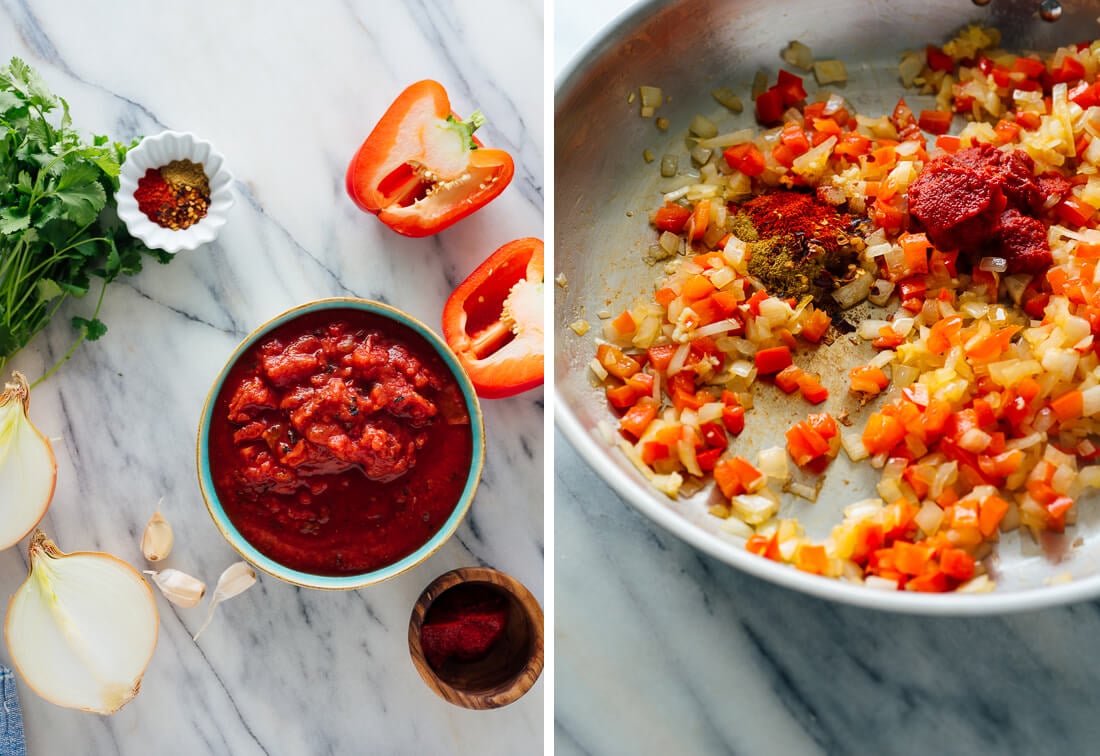
Shakshuka features poached eggs in a hearty, spiced tomato and pepper sauce. I top mine with tangy feta cheese and fresh cilantro or parsley.
Sometimes you’ll find artichoke or olives in shakshuka, but I left those out in this version. The spices vary somewhat as well. I settled on a combination of garlic, cumin and smoked paprika.
Shakshuka is a popular Middle Eastern and North African dish that may date back all the way to the Ottoman Empire. You’ll find it in Libya and Tunisia, and it’s become a staple dish in Israel. If you’ve ever had Italian “eggs in purgatory” or Turkish menemen, the dishes are all quite similar.
You can’t go wrong serving shakshuka for breakfast or brunch. It’s also great for lunch and dinner. Shakshuka is a simple one-pan meal that makes a statement, and it’s a great recipe to keep in your back pocket. Want to learn how to make it?
The post Foolproof Shakshuka appeared first on Cookie and Kate.

* This article was originally published here
from Merah Hati Cintaku https://ift.tt/2GL0zvm
via MerahHatiCintaku.blogspot.com
When in Venice, Eat Like a Venetian

By STEVEN RAICHLEN from NYT Travel https://ift.tt/2tENmf9
from Merah Hati Cintaku https://ift.tt/2NwlP8N
via MerahHatiCintaku.blogspot.com
How to Become a ‘Digital Nomad’
By KRISTIN WONG from NYT Travel https://ift.tt/2Xt7Y7C
from Merah Hati Cintaku https://ift.tt/2GMv3NM
via MerahHatiCintaku.blogspot.com
Tuesday, 26 February 2019
Spinach Namul and Bean Sprout Namul ほうれん草ともやしのナムル
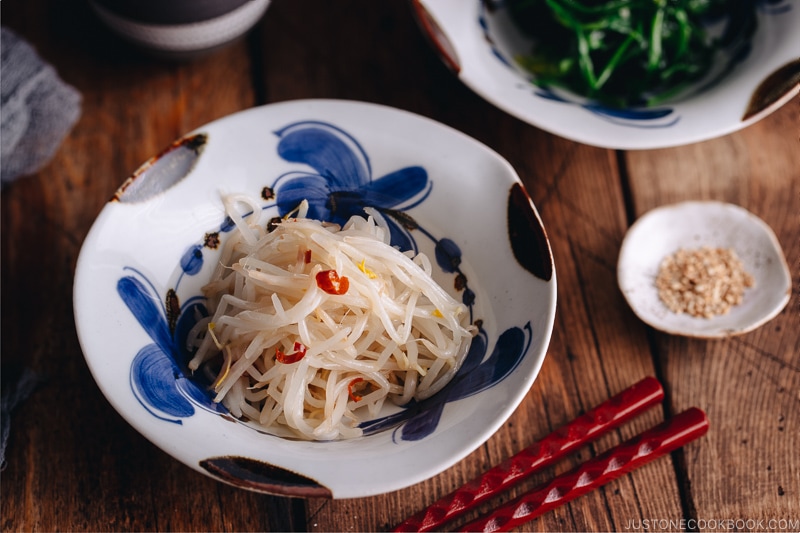
The Korean Spinach Namul and Bean Sprout Namul are two popular side dishes among meal prep menus in Japan. Enjoyed in a bento box or as a side to your dinner, these vegetable side dishes are not only appetizing but also very easy and quick to prepare.
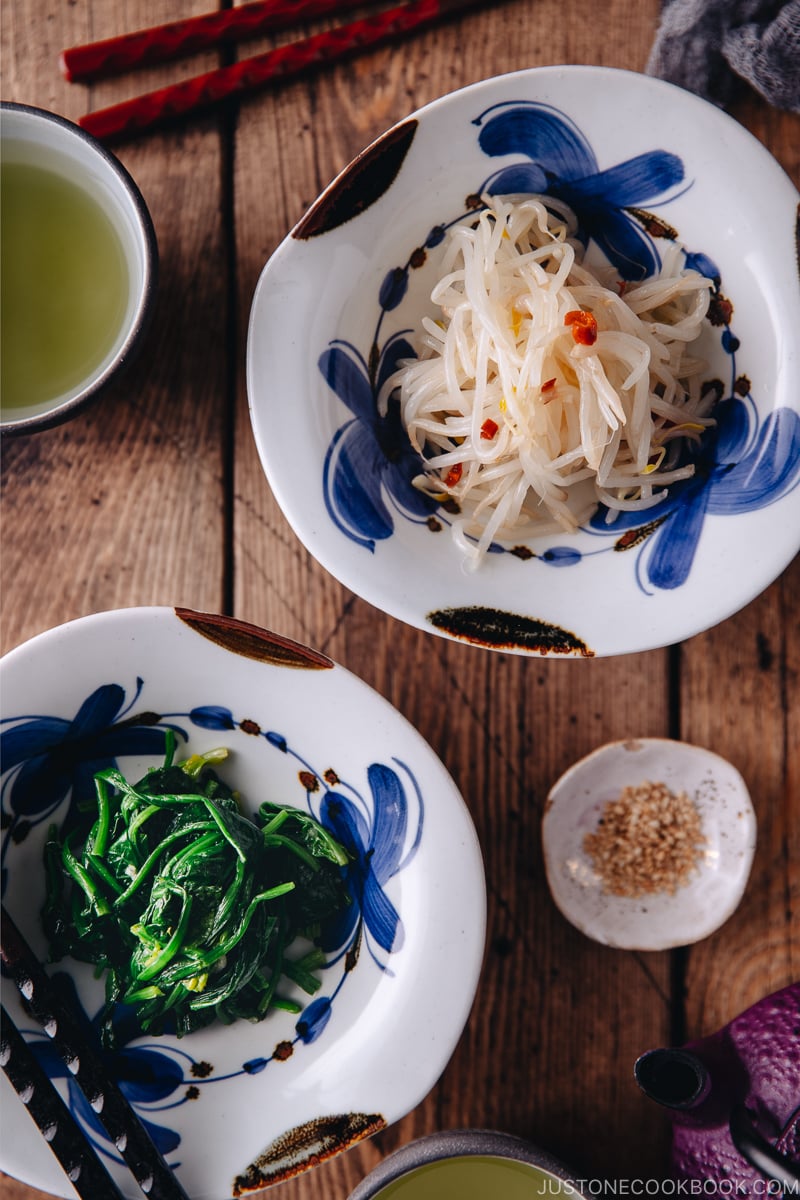
Budget-friendly, quick to make, and delicious, these Korean side dishes called Namul are the winners of meal prep in Japan. Almost every Japanese meal prep cookbook and online recipes include Namul, and that tells how popular they are in Japan.
I personally love these seasoned side dishes because they are the best way to include vegetables in your everyday meal. They are also fresh tasting with a slight crunch and incredibly aromatic from the fragrant sesame oil.
Today I’m featuring two most familiar namul recipes you often see on the table: Spinach Namul and Bean Sprout Namul.
What is Namul?
Namul (나물) refers to a wide variety of Korean side dishes. The most common namul is made of blanched vegetables that are seasoned with salt, sesame oil, soy sauce, doenjang, gochujang, etc. In a typical Korean meal, you often see them being served together as part of a colorful array of sides, Banchan (반찬), that complement the main meal, or as a component of Bibimbap (Korean mixed rice).
In Japan, we call it Namuru (ナムル), a more direct translation of the original dish in Korea, but pronounce in the Japanese way. We call Spinach Namul “Horenso no Namuru” (ほうれん草のナムル) and Bean Sprout Namul “Moyashi no Namuru” (もやしのナムル).
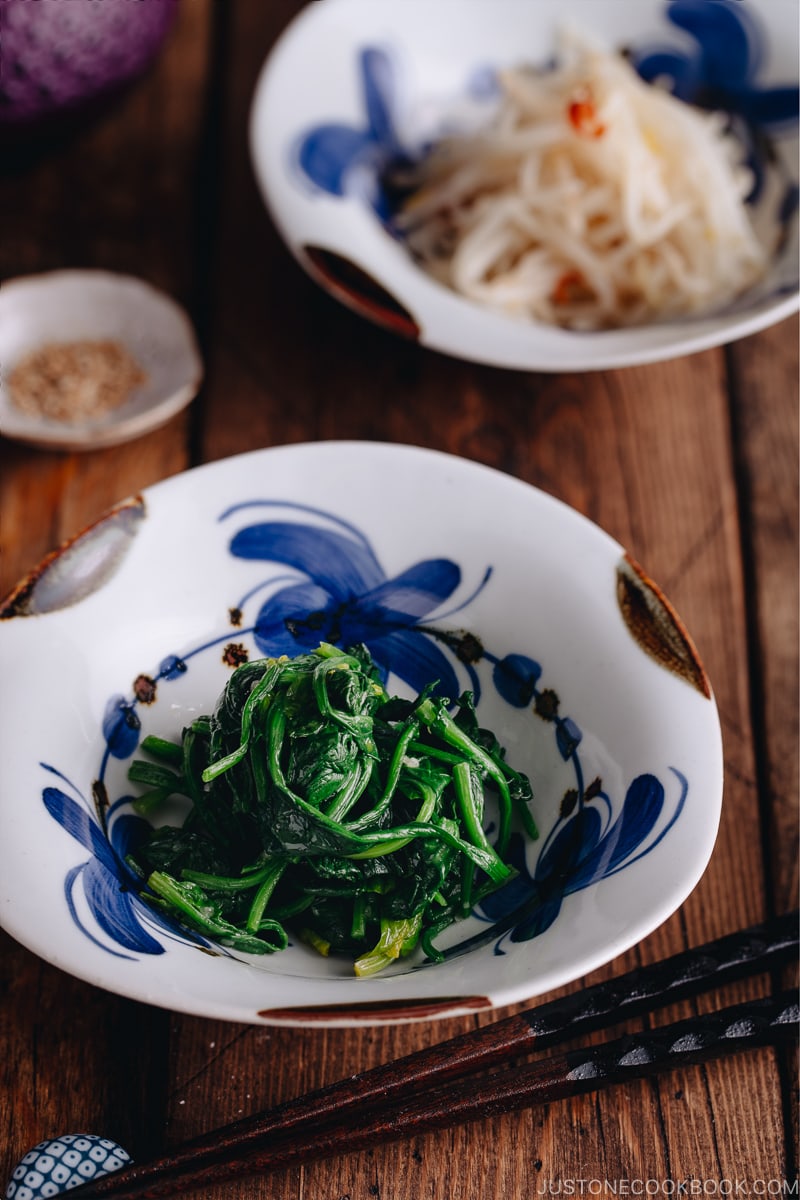
All You Need for Namul is Just 4 Ingredients!
The reason why I love Namul so much is that it includes ONLY 4 ingredients to make a simple side dish:
- Sesame oil
- Salt
- Garlic
- Vegetables (spinach/ bean sprouts)
Not to mention, it’s SUPER easy to make. Just blanch the vegetables, and mix with seasonings. And imagine all the possibilities with different choices of vegetables!
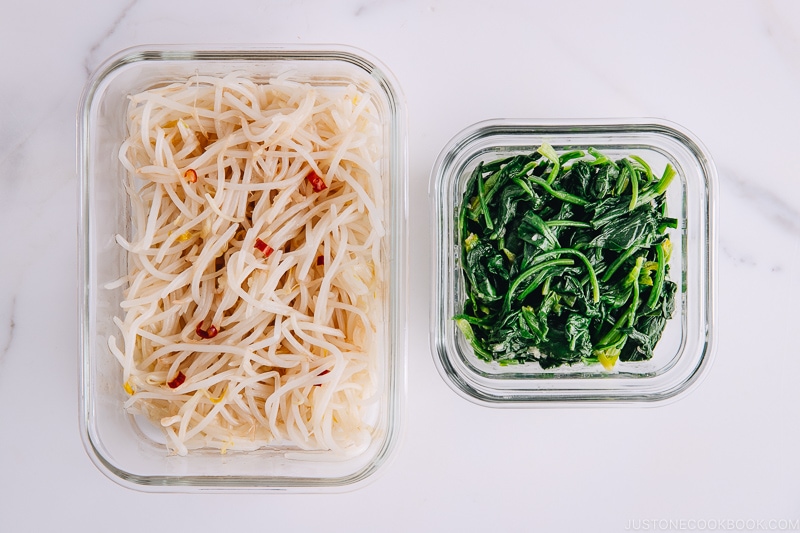
Preparing Namul for Your Meal Prep
With the rise of Korean influence in Japanese cooking, these side dishes became popular very quickly in our daily meals. When home cooks started to do meal prep more often in recent years, all kinds of Namuru (Namul) appear regularly as Jobisai (常備菜), the Japanese meal prep dishes.
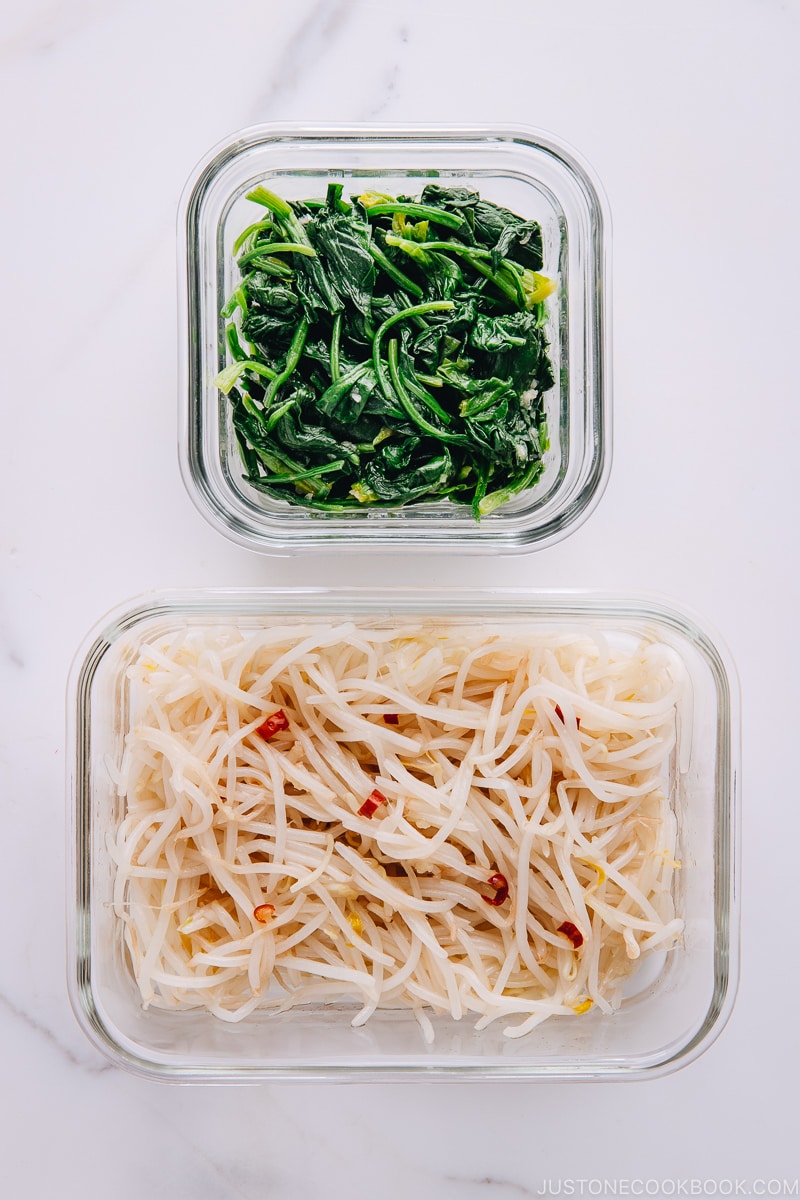
Both the Spinach Namul and Bean Sprouts Namul can be cooked in a big batch for later use throughout your week or bento menu. If you cook them on the same day, you can certainly save time by using the same pot. Once they are cooked, set aside the portions you need and keep them in separate containers before you store them in the refrigerator. They can be kept well for up to 3-4 days. You can serve both namul dishes alongside each other to complement a bento lunch or with other sides you prefer.
More recipes for Japanese Meal Prep (Jobisai 常備菜):
- Bean Sprout Salad (Namul); prepared with the same method but with slightly different seasonings.
- Japanese Spinach Salad
- Seafood Salad
- Ramen Egg
Japanese Ingredient Substitution: If you want to look for substitutes for Japanese condiments and ingredients, click here.
Sign up for the free Just One Cookbook newsletter delivered to your inbox! And stay in touch with me on Facebook, Pinterest, YouTube, and Instagram for all the latest updates.
Spinach and Bean Sprout Namul
The Korean Spinach Namul and Bean Sprout Namul are two popular side dishes among meal prep menus in Japan. Enjoyed in a bento box or as a side to your dinner, these vegetable side dishes are not only appetizing but also very easy and quick to prepare.
- 6 oz spinach ((170 g))
- 9 oz bean sprout ((255 g))
- ¼ tsp salt (kosher or sea salt; use half if using table salt) ((for blanching spinach))
Seasonings (make it for each ingredient)
- 1 Tbsp sesame oil
- ½ tsp salt (kosher or sea salt; use half if using table salt)
- 1 clove garlic
- 1 red chili pepper ((optional))
- Gather all the ingredients.
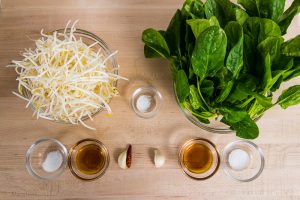
Bean Sprout Namul
-
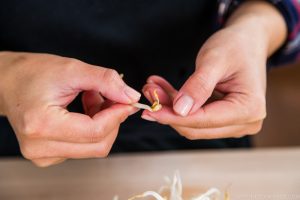
Remove the brown parts and stringy roots because bean sprouts taste much better without them, especially in simple seasonings.
-
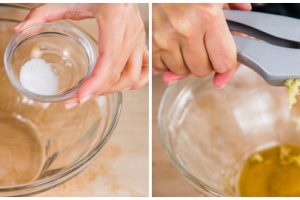
In a medium mixing bowl, combine 1 Tbsp sesame oil, ½ tsp salt, and crushed garlic from 1 clove.
-
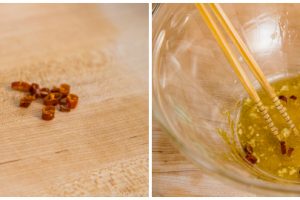
Add remove the seeds from 1 chili pepper and chop it into smaller pieces. You can keep the seeds if you want to make it spicy.
-
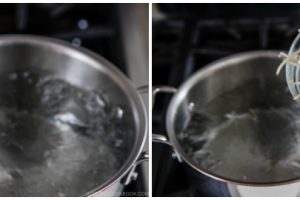
Bring a large pot of water to a boil. Once boiling, add ¼ tsp salt and add the bean sprout.
-
Cook for 60 to 90 seconds and take out the bean sprouts with a fine mesh skimmer or spider strainer. Drain water very well. If you make Spinach Namul as well, keep the water.
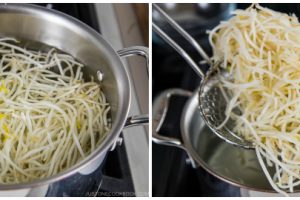
-
Coat the bean sprouts with the seasonings, transfer to the meal prep container with a lid, and let it marinate for at least 1 hour before serving. The bean sprouts will keep for up to 4 days in the refrigerator.
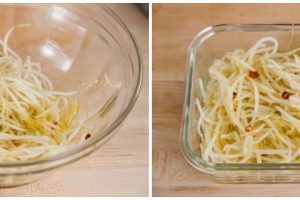
Spinach Namul
-
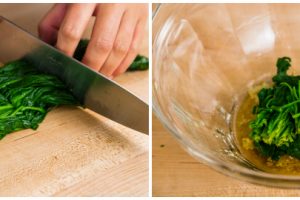
In the (same) medium mixing bowl, combine 1 Tbsp sesame oil, ½ tsp salt, and crushed garlic from 1 clove.
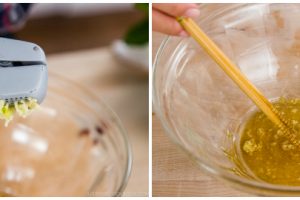
-
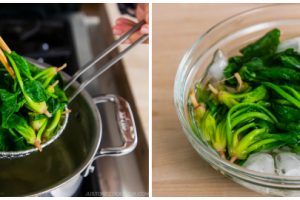
Hold the spinach upright, keeping the stems on the bottom and leaves on the top. Blanch the stem part for 15 seconds while you hold the leaves. Stem takes slightly longer to cook, so you cook from the stem side first. Then let the leaves submerged and cook for an additional 30-45 seconds.
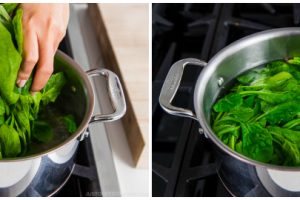
-
Remove the spinach from the water and soak in iced water to stop cooking with remaining heat. Alternatively, drain and run the spinach under cold running water until cool.
-
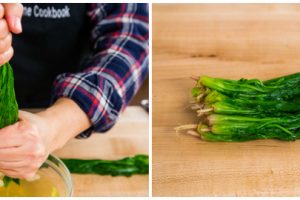
Collect the spinach and squeeze water out.
-
Cut the spinach into 1-inch (2.5 cm) pieces and add into the bowl with the seasonings.
-
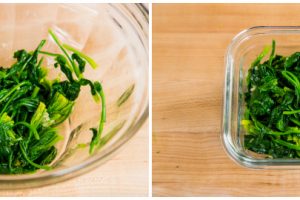
Mix well together, transfer to the meal prep container with a lid, and let it marinate for at least 1 hour before serving. The spinach will keep for up to 5 days in the refrigerator.
Japanese Ingredient Substitution: If you want to look for substitutes for Japanese condiments and ingredients, click here.
Recipe by Namiko Chen of Just One Cookbook. All images and content on this site are copyright protected. Please do not use my images without my permission. If you’d like to share this recipe on your site, please re-write the recipe in your own words and link to this post as the original source. Thank you.

from Merah Hati Cintaku https://ift.tt/2GMjrdt
via MerahHatiCintaku.blogspot.com